
Understanding cultural identities and shared human values to create more inclusive senior living communities.
Growing older is one of the few experiences we all share. But what it means to age well, who we expect to care for us, and what we consider a fulfilling life in our later years can look remarkably different depending on where we come from.
Across the world, cultural traditions shape how we view aging, family responsibilities, independence, and community. Understanding these differences is important, particularly as our society becomes increasingly diverse. But when it comes to designing senior living communities, there's another perspective worth exploring: What if we focused just as much on the values that bring us together as the differences that set us apart?
After all, while our traditions and expectations may differ, the fundamental human desire to feel respected, connected, valued, and at home is something we can all relate to.
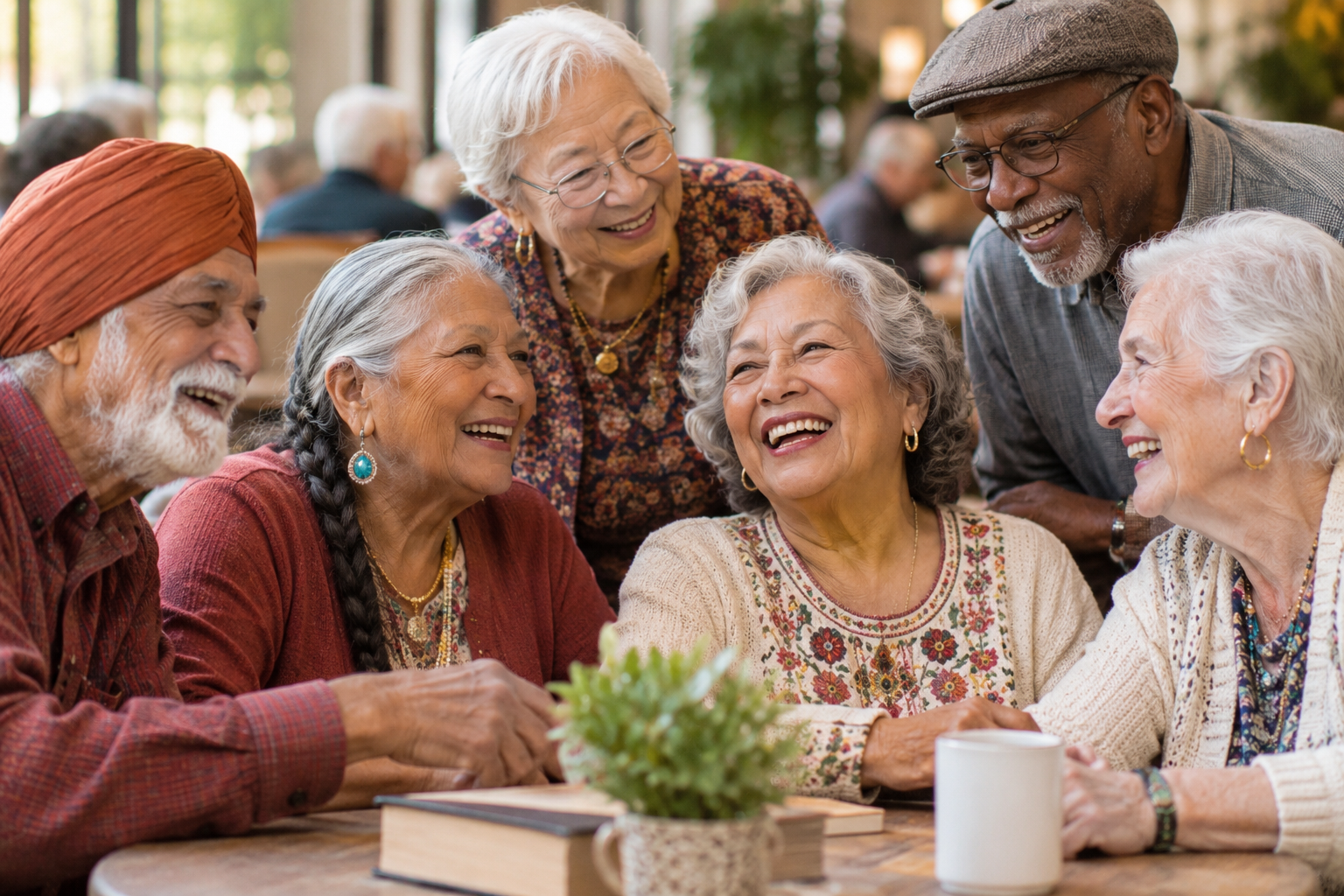
Different Cultures, Shared Human Values
Culture influences how we see the world, and aging is no exception. Across Native American, Black American, Latino, Asian, Middle Eastern, and European communities, we find distinct traditions that influence how older adults are viewed, supported, and included in society. Of course, these broad groups represent hundreds of nationalities, ethnicities, tribal nations, religions, and individual experiences, making it impossible to define any single approach to aging.
In many Latino, Asian, and Middle Eastern families, caring for aging parents has traditionally been viewed as an important family responsibility. Similar values can be found in Black American communities, where extended family networks, faith communities, and neighborhood relationships have historically provided meaningful support. Within numerous Native American communities, elders hold important roles in preserving language, oral histories, and cultural traditions, helping maintain connections between generations.
Even within Europe, cultural expectations surrounding aging can vary considerably. In Mediterranean countries such as Italy, Spain, and Greece, family involvement and social connections have traditionally played important roles in supporting older generations. Meanwhile, Nordic countries such as Denmark and Sweden have developed extensive public services and housing systems designed to help people maintain their independence as they age. Although the approaches differ, both reflect the importance of providing older adults with support, security, and opportunities to remain connected to their communities.
What stands out isn't necessarily how differently we age, but how often the same values appear in different forms. Family, respect, independence, community, and the desire to remain an active participant in life are recurring themes across cultures. How we express these values may differ, but their importance is remarkably familiar.
When Cultural Traditions Meet Modern Realities
Of course, cultural expectations don't exist in isolation. They evolve alongside changes in family structures, economic pressures, migration, and longer lifespans.
Imagine an older adult who grew up believing that aging parents would eventually live with their children. Now imagine their adult children living hundreds of miles away, managing careers, raising families, and facing financial pressures of their own. The older adult may see moving into senior living as losing an important family connection, while their children may see it as an opportunity for better care, safety, and social engagement. Neither perspective is necessarily wrong.
According to AARP and the National Alliance for Caregiving's 2025 research, more than 51 million Americans provide care to adults age 50 or older. Meanwhile, Pew Research Center's analysis of 2024 census data found that approximately 30% of Asian and Hispanic Americans and 29% of Black Americans lived in multigenerational households, compared with 16% of White Americans. Although these figures include people of all ages and don't necessarily represent caregiving arrangements, they demonstrate the different ways families organize their lives.
These realities create challenges for senior living providers. It would be unrealistic to expect one community to accommodate every cultural tradition, family structure, or personal preference through its physical design. Nor would doing so necessarily create a more inclusive environment.
Instead, perhaps the greater opportunity lies in understanding the common needs behind those expectations. A resident who values frequent family visits and another who prioritizes personal independence may have different lifestyles, but both want to maintain control over the relationships and routines that matter to them.
Designing Around What Connects Us
Senior living design has evolved significantly over the past several decades, moving beyond institutional models toward environments that prioritize hospitality, wellness, social connection, and personal choice. Yet creating a truly welcoming community requires looking beyond amenities and aesthetics to understand what makes people feel comfortable, respected, and connected.
Rather than attempting to represent every culture through design, we can focus on a few fundamental human needs that transcend cultural boundaries.
A Sense of Belonging. Regardless of cultural background, people want to feel that they are part of something meaningful. This may come through friendships, family relationships, shared interests, or simply feeling recognized within their community. Thoughtful design can support these connections through comfortable, approachable environments that encourage everyday interaction without making social participation feel obligatory.
Dignity and Personal Choice. Independence doesn't look the same for everyone. For some, it means maintaining privacy and control over daily routines. For others, it means remaining involved in family decisions or participating in meaningful activities. Environments that offer flexibility, accessibility, and opportunities for personal expression allow residents to maintain a greater sense of control over their lives.
Familiarity and Comfort. A sense of home isn't defined by one particular design style. It's shaped by personal memories, familiar routines, meaningful belongings, and the freedom to live in ways that feel natural. Creating welcoming residential environments with opportunities for personalization can help residents maintain a connection to their identity, regardless of where they come from.
Purpose and Connection. Across cultures, older generations have played important roles as mentors, caregivers, storytellers, and active community members. Aging shouldn't automatically mean stepping away from those roles. The World Health Organization identifies intergenerational contact as one approach to reducing ageism, reinforcing the value of creating opportunities for meaningful interaction between generations.
We see this broader approach to everyday living reflected in innovative models such as the Ellen & Peter Johnson Dementia Village at Agrace in Madison, Wisconsin, where Thoma-Holec Design is part of the interior design team. Inspired by the Dutch Hogeweyk model, the planned village incorporates small residential households and familiar neighborhood elements to support autonomy, meaningful relationships, and a more personal living experience for people with dementia.
Finding Unity Without Losing Individuality
Focusing on what connects us doesn't mean overlooking cultural differences. Language, religious practices, food traditions, family expectations, and personal histories remain important parts of a person's identity and deserve consideration. But inclusivity doesn't necessarily require creating a different environment for every cultural background.
It requires designing with enough thoughtfulness and flexibility that people from different backgrounds can feel equally welcome.
For designers, developers, and operators, this means understanding the people a community will serve, involving residents and families in the planning process, and recognizing that a truly inclusive environment extends beyond interior design. Staffing, dining, communication, programming, and daily operations all play important roles in shaping the resident experience.
At Thoma-Holec Design, we believe the best senior living environments begin with understanding people, not simply demographics. While our cultural backgrounds may influence how we experience aging, our shared desire for dignity, connection, independence, and belonging provides a powerful foundation for thoughtful design.
Because great senior living design isn't about accommodating every difference. It's about understanding what makes us human and creating places where everyone has the opportunity to feel at home.