
Hospitality or Residential? Why Senior Living May Need Both
There has been a noticeable shift in the conversation around senior living design. After years of looking to hotels and resorts for inspiration, the industry is talking more about residential environments, spaces that feel familiar, comfortable, personal and more like home.
It’s an important conversation, but it raises a question: does becoming more residential mean senior living should move away from hospitality altogether?
At THD, we don’t necessarily see the two as competing ideas. Senior living is home, but it is also a lifestyle. Residents aren’t simply choosing an apartment; they’re choosing a community where they may dine, socialize, exercise, entertain family, attend events and spend a significant part of their day. There are moments when the familiarity of home matters deeply, and others when residents may want an experience that feels completely different from home.
Perhaps the opportunity isn’t to decide between hospitality and residential design, but to become more intentional about where each belongs.
Hospitality Still Has a Place
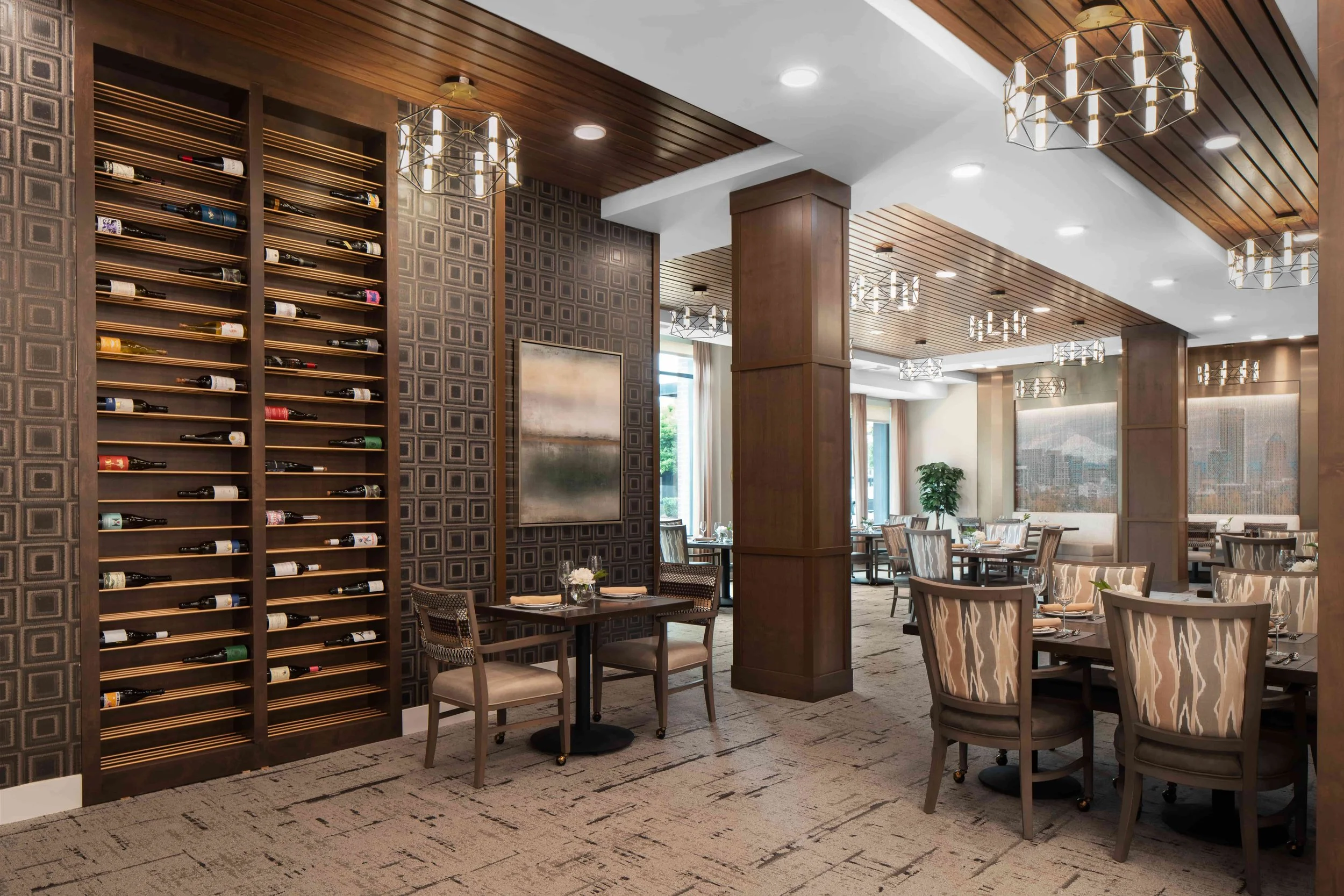
Hospitality has had a significant influence on the evolution of senior living, helping the industry move beyond the institutional environments that once defined it. Dining became more varied, wellness expanded beyond the traditional fitness room, and bars, cafés, salons, spas and outdoor gathering spaces became part of a much broader approach to community life.
Those expectations haven’t disappeared. A recent Environments for Aging (EFA) article, a publication dedicated to the planning, design and construction of senior living environments, highlights how bars and pubs in senior living communities are evolving from occasional-use amenities into flexible social hubs for coffee, casual gatherings, tastings and other daily activities.
This shift reflects changing resident expectations and the growing influence of hospitality, restaurants and travel. It also shows how hospitality-inspired design can add value throughout a community. Restaurants can feel like destinations rather than simply places where meals are served, lounges can have their own energy and identity, and wellness spaces can offer a sense of escape.
These spaces do more than serve a function. They give residents more choices, create opportunities for connection and shape first impressions for prospective residents and their families. The goal is to design amenities that are not only attractive during a tour, but places residents genuinely want to use every day.
Residential Means More Than a Residential “Look”
At the same time, not every part of a community needs—or should have—that same sense of destination. Senior living is still where residents wake up in the morning, walk down the hall, pick up their mail, visit a neighbor, spend time with family and return at the end of the day. Those everyday moments call for something different.
This is where we think the conversation around residential design becomes especially important. But residential shouldn’t simply become another aesthetic. It isn’t defined by a certain sofa, color palette or style of millwork. It’s more about scale, familiarity, comfort and the way a space supports everyday life.
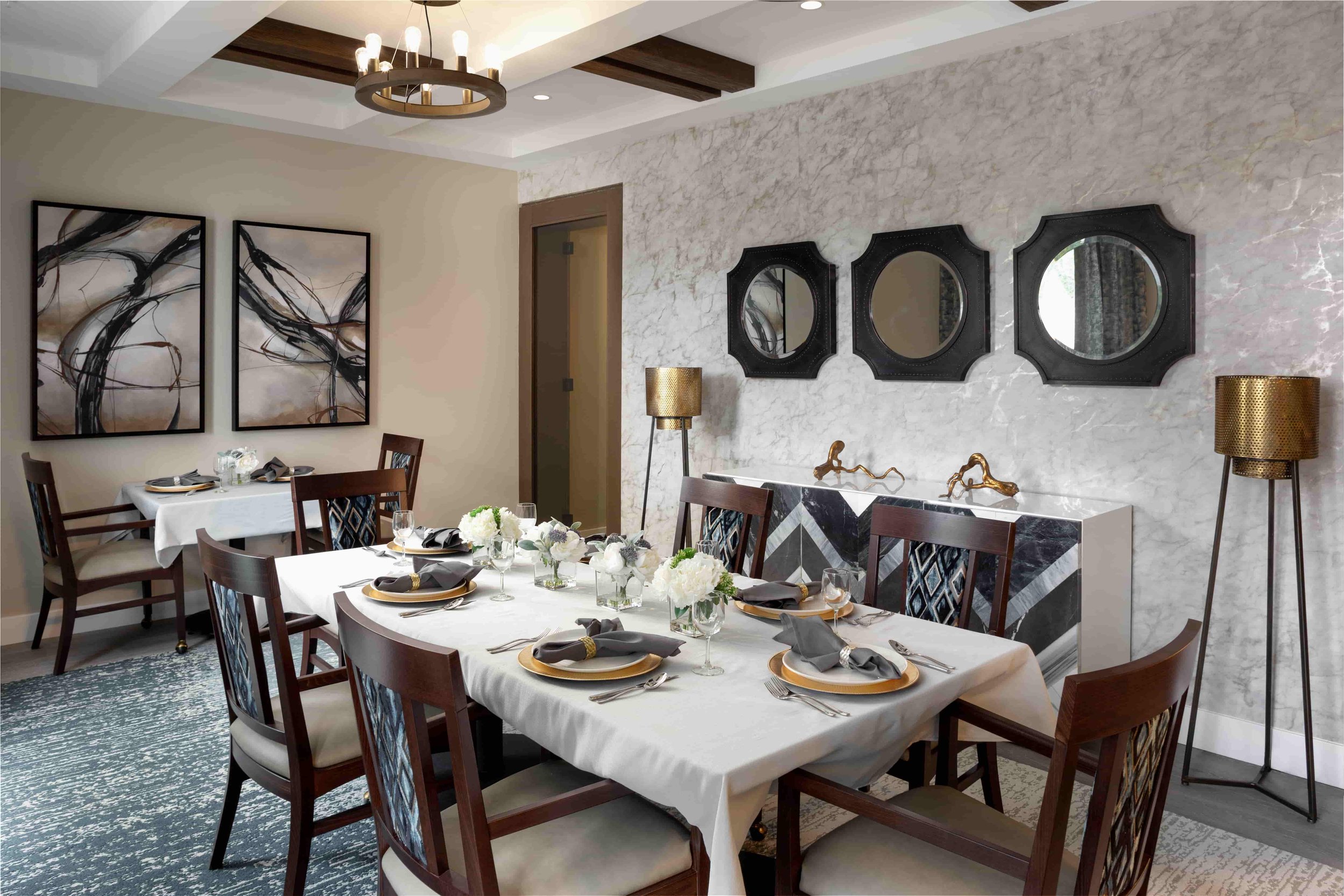
A large lounge, for example, might be visually impressive but still benefit from smaller furniture groupings that make it comfortable for two or three people to sit together. A corridor can do more than move residents from one destination to another; thoughtful seating, artwork, lighting and recognizable moments along the way can help it feel connected to the neighborhood around it. Private dining can have the warmth and intimacy of inviting family over rather than feeling like a smaller version of the community’s main restaurant.
There is also growing industry interest in smaller-scale residential models. Senior Housing News (SHN), a publication covering the business of senior housing, including development, operations, investment and emerging industry trends, recently explored the growth of residential assisted living and small-home concepts. Operators interviewed for the article pointed to personalized care and a more home-like environment as important parts of the appeal of these models.
That doesn’t mean every community should follow a small-home model, nor does it mean a residential environment needs to follow one particular design style. What it does reinforce is something the senior living industry has understood for a long time: the feeling of home matters.
The challenge is preserving that feeling even within larger communities that offer extensive amenities and serve many residents.
A Community Can Offer Both Experiences
This is where hospitality and residential design can begin to work together rather than against each other.
Consider how people live outside of senior living. We may meet friends at a restaurant, spend an afternoon at a spa, have a drink at a favorite bar or attend an event somewhere exciting. Then we go home. We don’t expect all of those environments to feel alike, and part of what makes each experience enjoyable is that they don’t.
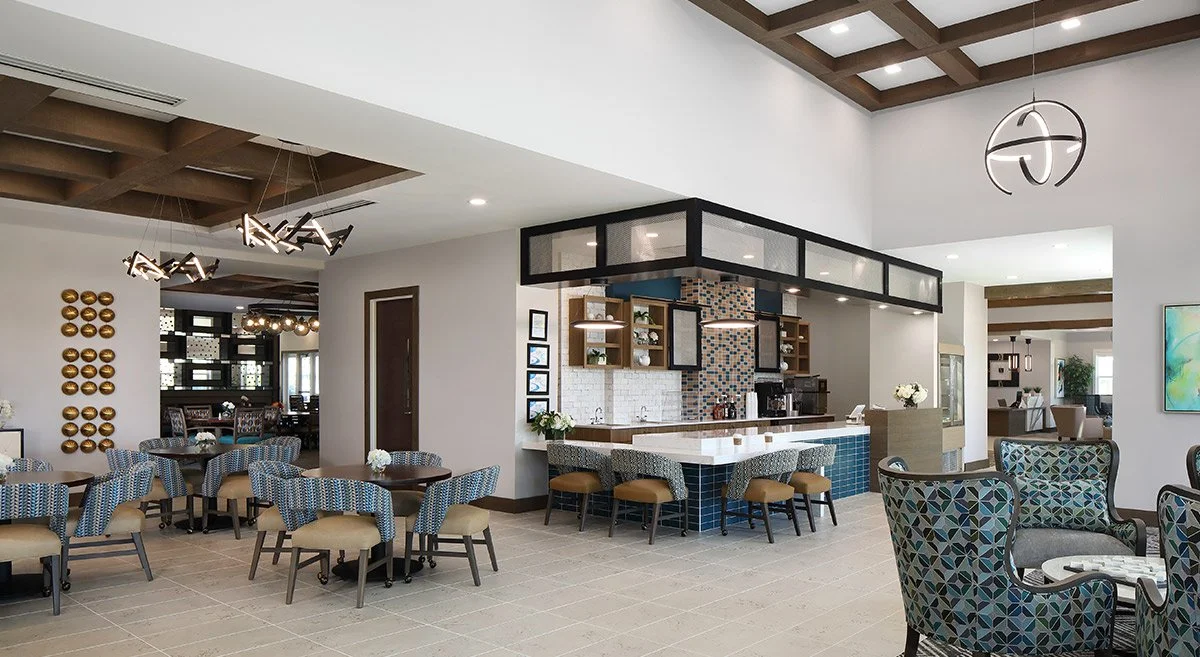
A senior living community can offer that same variety. A resident might have dinner in a restaurant-style venue, meet friends in an energetic bar or lounge, participate in a wellness class and then return to a quieter residential neighborhood. Along the way, the scale, energy and character of the environment can change to support what is happening within it.
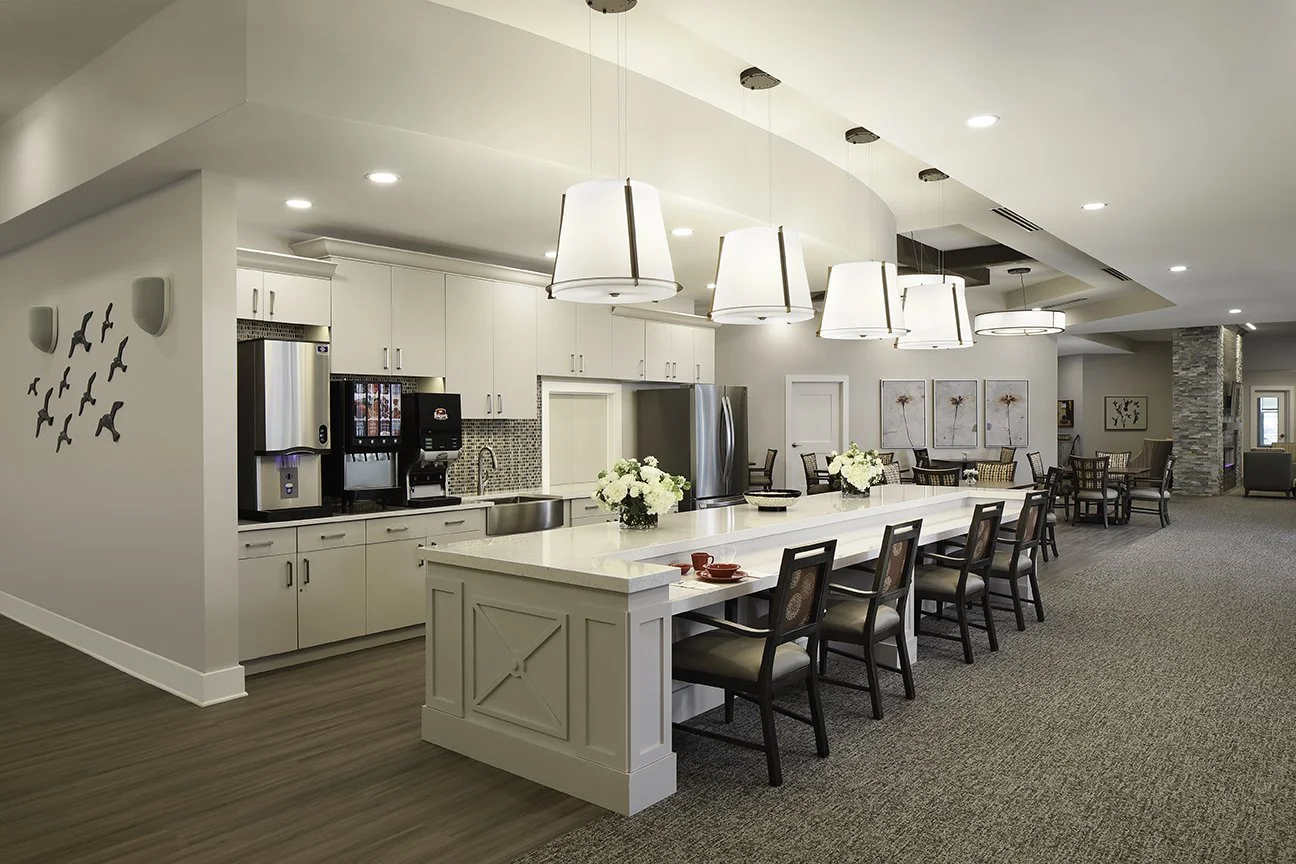
That creates a more layered experience than applying one design approach throughout an entire building. Public-facing amenities can carry more energy and personality, while residential neighborhoods and everyday gathering spaces can become progressively more intimate and familiar.
This distinction may become even more important as communities offer a greater variety of amenities. Rather than asking every space to make a statement, design can help establish a rhythm between activity and relaxation, public and private, destination and home.
The Right Balance Will Look Different Everywhere
Location should also influence where that balance falls. A senior living community doesn’t exist separately from the market around it, and what feels authentic in one location may feel completely out of place in another.
A community in a resort-oriented market may naturally lean further into outdoor living, wellness and destination-style amenities. A mountain community may have a completely different relationship with its landscape and surrounding lifestyle. An urban community may take cues from nearby restaurants, cultural venues, architecture and the energy of the city. The expectations of residents entering those communities are also shaped by how and where they were already living.
This is why we don’t believe there should be a universal formula for how much of a community should feel residential versus hospitality-driven.
The more useful starting point is understanding the market, the resident and the purpose of each space. What experience should this room provide? How will residents actually use it? Does it need energy or intimacy? Is it somewhere residents go specifically for an experience, or is it part of the rhythm of everyday life?
Those questions can lead to very different design decisions, even within the same building.
Designing for Everyday LifeDesign Has to Go Deeper Than the Experience
There is another layer that can’t be overlooked. Whether a space feels like a restaurant, a spa, a living room or something in between, senior living design still has to respond to the realities of aging.
Accessibility, acoustics, lighting, wayfinding, durability, mobility, operations and changing care needs don’t disappear because a space is meant to feel residential or hospitality-inspired. They have to be integrated into the experience rather than added afterward.
This idea is also appearing in the broader industry conversation. In another 2026 Environments for Aging discussion, industry professionals addressed the balance between lifestyle-driven senior living and the practical requirements of these environments. One of the central points was that hospitality thinking and healthcare functionality don’t have to compete. A space can feel elevated and experience-driven while still addressing accessibility, durability, operations and the realities of daily use.
For designers, that means the conversation can’t stop at how a space looks. A beautiful bar that is difficult for a resident to navigate isn’t successful. Neither is a cozy residential lounge that doesn’t function for mobility devices, staff or changing resident needs.
Good senior living design has to accomplish both: create the experience people want while quietly supporting the realities of how they live.
Moving Beyond Hospitality vs. Residential
Senior living has spent decades evolving away from institutional design, and hospitality played an important role in that transformation. Now, as the industry looks toward the next generation of residents, the growing interest in more residential environments doesn’t necessarily need to replace what came before. It may simply be another step in that evolution.
Residents can want the restaurant, the spa, the bar, the beautiful lobby and the active social environment. They can also want a quiet place outside their apartment to read, a familiar neighborhood where they recognize their neighbors and a private dining room that feels comfortable when their family comes to visit.
Those aren’t conflicting expectations. They’re different parts of life.
At THD, we believe the opportunity is to understand where hospitality adds to the experience and where a more residential approach creates a stronger sense of home—and then design the transitions between those moments thoughtfully.
Because the question may no longer be whether senior living should feel like a resort or a residence.
The better question is: where should it feel like each?