
If Healthy Habits Support Cognitive Health... What Role Does Design Play?
As our understanding of healthy aging continues to evolve, so does the conversation surrounding cognitive health. Emerging research increasingly points to the important role that lifestyle factors—including nutrition, physical activity, and social engagement—play in supporting cognitive function before and after the onset of cognitive impairment. While these findings continue to develop, they also present an important question for designers:
If healthy habits matter, what role does the built environment play?
At Thoma-Holec Design, we believe the answer extends far beyond aesthetics. Interior design cannot prescribe healthy behaviors, nor can it replace clinical care. What it can do is create environments that make those behaviors feel more intuitive, enjoyable, and naturally integrated into everyday life.
For senior living communities, that distinction is significant. Wellness programs, nutritious dining, and engaging activities all contribute to resident well-being, but their success often depends on whether residents are encouraged to participate. Thoughtful design helps remove barriers and creates environments where movement, connection, and daily routines become part of the natural rhythm of community life.
Missing Piece: Designing for Participation
Senior living communities have long invested in wellness programming, dining services, and enriching activities. Yet participation is influenced by more than the quality of those offerings alone. The physical environment plays a quiet but powerful role in determining whether residents choose to engage.
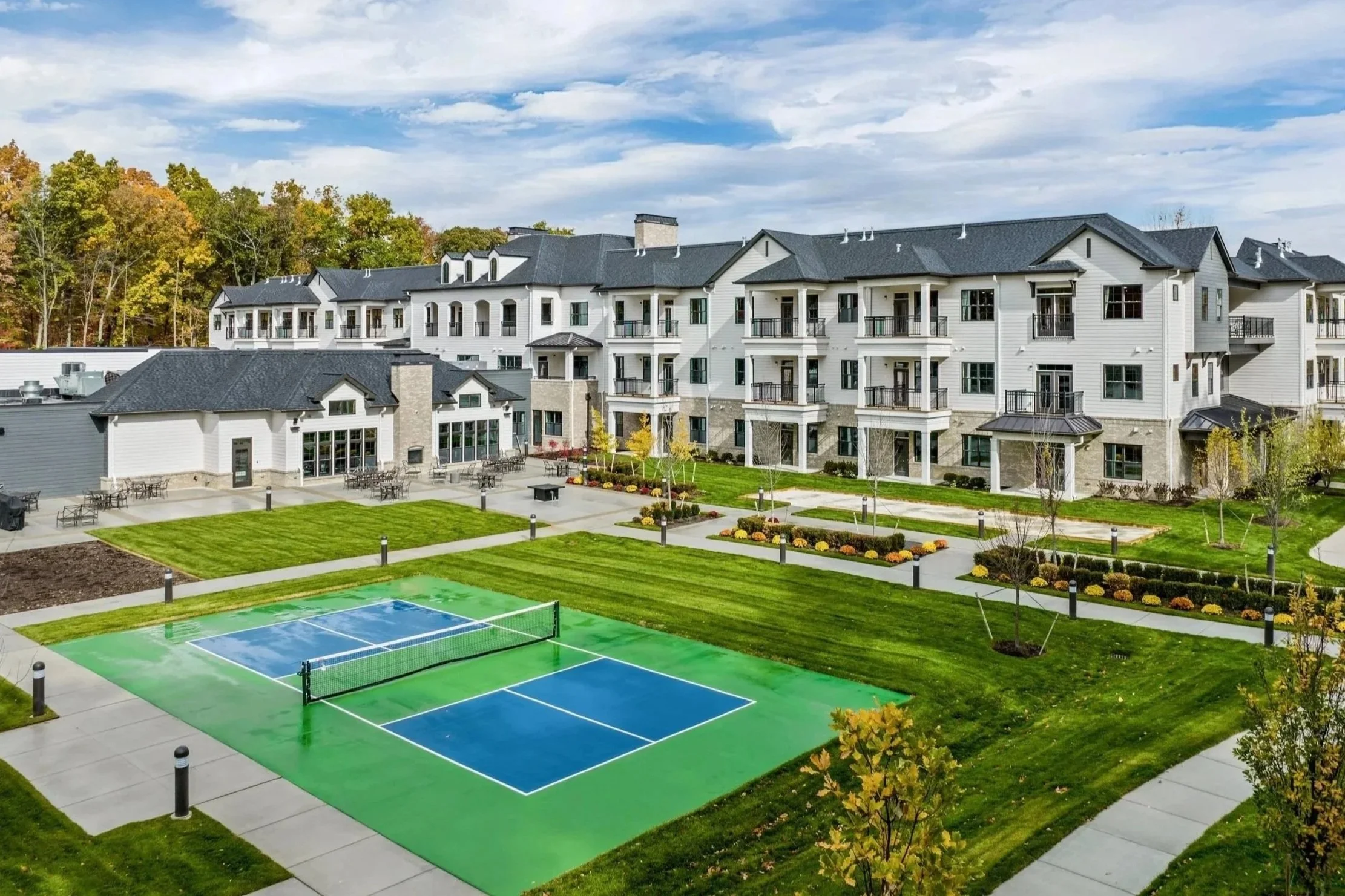
An inviting courtyard is more likely to encourage an afternoon walk than an isolated outdoor patio. A welcoming bistro becomes a destination rather than simply another dining venue. Comfortable seating along a walking route creates opportunities to pause, socialize, and continue exploring. These design decisions may appear subtle, but together they help shape daily behaviors.
The goal is not to encourage movement through instruction. It is to create communities where movement happens naturally because residents have meaningful places they want to visit.
Designing Communities That Encourage Movement
Movement is often associated with scheduled exercise classes or fitness centers. While those amenities remain valuable, many of the most meaningful opportunities for physical activity occur throughout the course of an ordinary day.
Walking to lunch, visiting a friend, enjoying a landscaped courtyard, or spending time on an outdoor putting green all contribute to an active lifestyle. When thoughtfully planned, these destinations encourage residents to remain engaged without making movement feel like a prescribed activity.
Design supports this by creating intuitive pathways, welcoming outdoor environments, and amenities that are connected rather than isolated. Clear circulation, inviting walking routes, strategically placed seating, and recognizable landmarks help residents navigate their communities with confidence while encouraging exploration and discovery.
In this way, movement becomes woven into the experience of everyday life rather than limited to designated exercise spaces.

Nutrition Begins with the Experience
Nutrition is another important component of healthy aging, but the dining experience extends well beyond the meal itself.
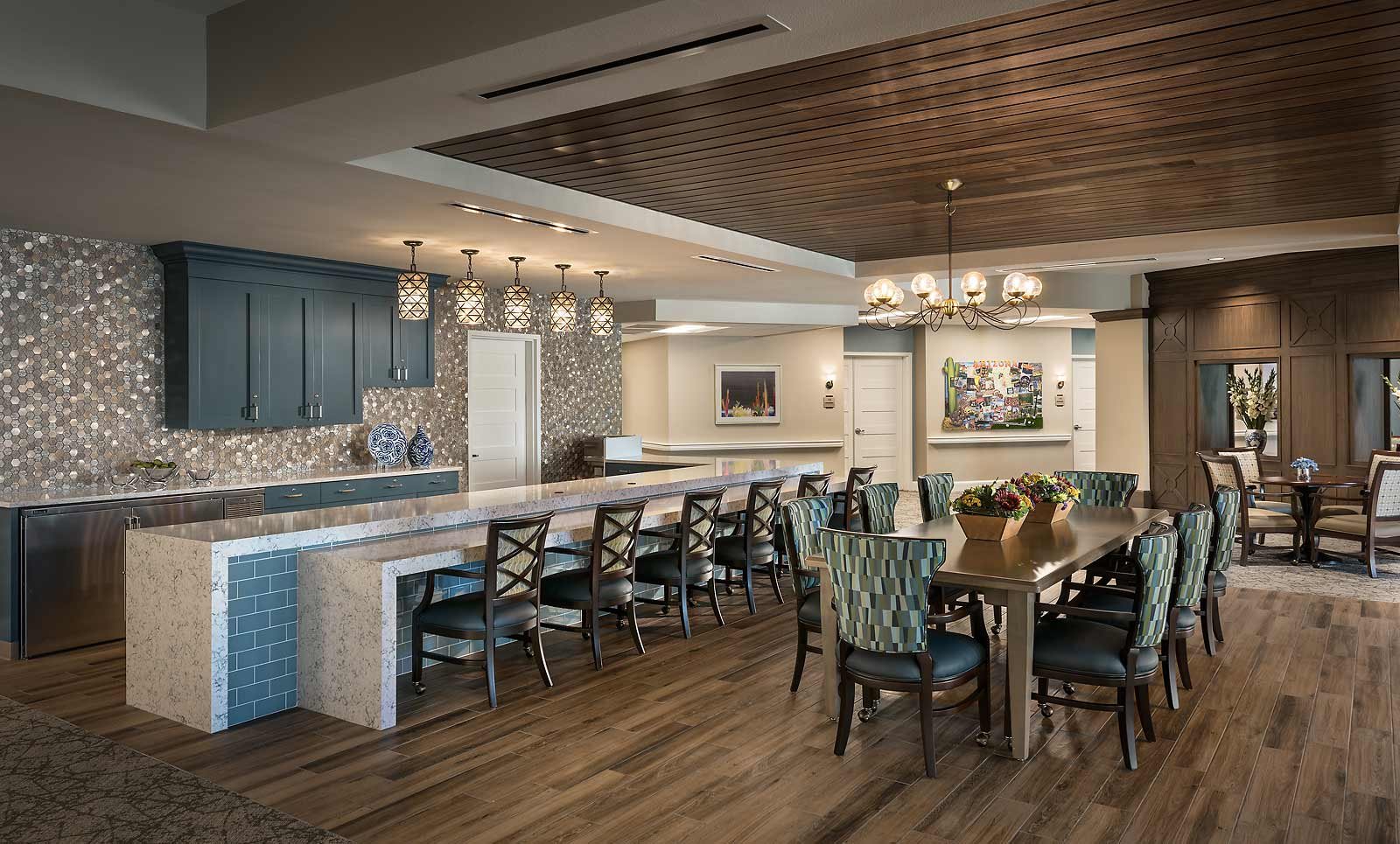
The environment surrounding dining can influence appetite, comfort, and social engagement. Warm, welcoming dining environments dining venues, exhibition kitchens, abundant natural light, comfortable acoustics, and thoughtfully designed seating arrangements transform mealtime into an experience residents genuinely look forward to.
These environments encourage conversation, stimulate the senses, and reinforce familiar daily routines that contribute to overall well-being. Rather than simply serving meals, thoughtfully designed dining spaces create opportunities for connection, enjoyment, and community.
For many older adults, these everyday rituals become just as meaningful as the nutritional value of the food itself.
Intuitive Design Supports Independence
One of the most overlooked contributors to healthy aging is independence.
When residents can easily navigate their community, locate amenities, and move independently between destinations, they are more likely to participate in daily life. Conversely, confusing layouts or disconnected amenities can unintentionally discourage exploration and limit engagement.
This is where intuitive design and thoughtful wayfinding become essential.
Clear circulation patterns, recognizable destinations, visual landmarks, appropriate lighting, and carefully considered spatial planning help residents move through their environment with greater ease and confidence. While often invisible to the casual observer, these design strategies support autonomy and encourage residents to remain active participants in community life.
Ultimately, great wayfinding is not simply about helping people find their destination. It is about creating environments that feel welcoming, understandable, and comfortable to navigate.

Designing for Everyday Life
The role of interior design is not to prevent or treat cognitive disease. Its role is to create environments that support the daily experiences associated with healthy aging.
As research continues to deepen our understanding of how nutrition, movement, and social engagement contribute to cognitive health, the built environment deserves to be part of that conversation. Communities that thoughtfully integrate intuitive wayfinding, meaningful destinations, hospitality-inspired dining, and opportunities for everyday movement are helping create environments where healthy habits feel less like a program and more like a way of life.
At Thoma-Holec Design, this philosophy has long guided our work. We believe the most successful communities are those that encourage residents to explore, connect, move, and engage—not because they are instructed to, but because the environment naturally invites them to do so.
Because thoughtful design is about more than creating beautiful spaces. It is about creating places where people can continue living well.