
What If Memory Care Were Designed Around Identity, Not Diagnosis?
Designing for Identity: A New Approach to Dementia Care
As we recognize the ongoing need to support those living with dementia, conversations often focus on research, treatment, caregiving, and support services. These efforts are essential. Yet there is another factor that profoundly influences quality of life for people living with dementia: the environment itself.
For many years, dementia care settings have been shaped primarily by clinical needs, safety requirements, and operational considerations. While these priorities remain critical, they do not fully address what it means to live well with dementia.
At Thoma-Holec Design, we believe the future of dementia care begins with a broader understanding of the individual beyond their diagnosis.
Rethinking the Traditional Memory Care Model
Historically, Memory Care environments have been designed to reduce risk and support daily care routines. Safe circulation paths, clear wayfinding, and secure outdoor spaces remain essential components of successful dementia design. These strategies have improved safety, reduced confusion, and helped caregivers provide consistent support.
Those principles remain important today. However, a growing body of research and emerging care models suggest that safety alone is not enough.
The conversation is evolving beyond how we care for people living with dementia and toward how we create environments that reflect the interests, routines, and relationships that continue to shape daily life. Achieving that goal requires a deeper understanding of the people who will inhabit those spaces.
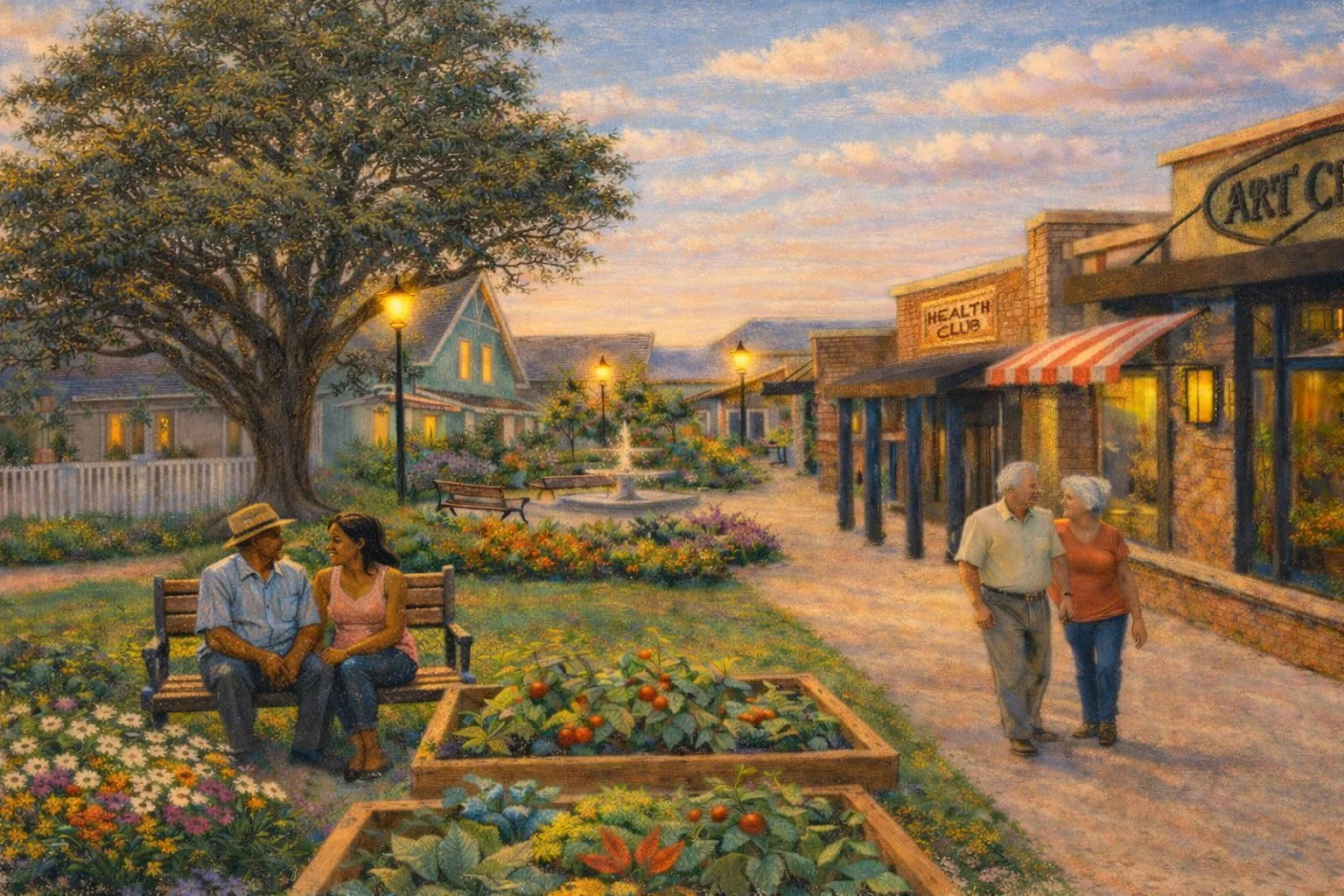
The Person Beyond the Diagnosis
A dementia diagnosis may alter memory and cognition, but it does not erase a lifetime of experiences, relationships, passions, and accomplishments.
The teacher who spent decades inspiring students still carries a love of learning. The gardener remains connected to the rhythms of nature. The artist continues to seek opportunities for creativity and self-expression. The person who welcomed family and friends around the dinner table still values relationships, hospitality, and togetherness.
These deeply rooted aspects of a person’s life often remain long after other abilities have changed. They continue to influence what feels familiar, what provides comfort, and what gives daily life meaning.
Design has the ability to acknowledge those realities, creating environments that feel intentional, recognizable, and relevant to the people who live within them.
The Research
As part of the visioning process for the Ellen & Peter Johnson Dementia Village at Agrace in Madison, Wisconsin, Agrace’s dementia village conducted extensive lifestyle research to better explore the values, interests, and life histories of future residents.
Traditionally, senior living communities are organized around levels of care. While this approach serves an important operational purpose, it does not necessarily reflect how people define home, what brings them enjoyment, or how they prefer to spend their time.
The Agrace’s dementia village challenged that convention by exploring how personal histories, interests, and lifestyle preferences could help inform the character of the community itself.
The research identified several lifestyle profiles. Some individuals are drawn to culture, learning, travel, and discovery. Others enjoy family traditions, celebrations, and shared activities. Many are people who find satisfaction in familiar routines, hobbies, craftsmanship, community involvement, and the comforts of everyday life.
While this type of research may seem more closely associated with behavioral science than interior design, it became a valuable design tool. Understanding how people live, what they value, and the environments they associate with home provides important insight into how spaces can better support daily life.
Designing Through Lifestyle Research
One of the most innovative aspects of the Ellen & Peter Johnson Dementia Village at Agrace is not the village concept itself, but the process used to shape it.
Rather than beginning solely with operational requirements or care needs, THD used the lifestyle research as a framework for examining how residents may perceive comfort, familiarity, and home. This led to a design philosophy we refer to as “Linking the Past with the Future.”
At its core, this philosophy recognizes that personal history remains an important part of who someone is, even as their needs change. The design team explored architectural styles, materials, and residential influences that were prevalent when many residents were purchasing their first homes, raising families, building careers, and establishing a sense of identity and belonging, while also drawing from the regional character and residential patterns common throughout Wisconsin.
For residents who value gathering, entertaining, and social interaction, concepts inspired by Mid-Century Modern design draw upon the optimism and familiarity associated with that era. For those drawn to craftsmanship, culture, and lifelong learning, Prairie-style influences provide a strong sense of authenticity and place. Residents who value tradition, collections, hobbies, and established routines may feel more at home in environments that embrace timeless residential character and layered personal expression.
These concepts are not intended to recreate the past. Instead, they draw on familiar design references to create environments that feel recognizable, comfortable, and easy to navigate.
This approach influences decisions at every scale—from household organization and planning to materials, furnishings, lighting, and shared spaces. While each household reflects a different lifestyle and sense of home, all are designed to support well-being, independence, and meaningful daily living.
Leading the Next Generation of Dementia Design
As the number of people living with Alzheimer’s disease, vascular dementia, Lewy body dementia, frontotemporal dementia, and other cognitive conditions continues to rise, the senior living industry faces an important responsibility.
How can we create environments that support not only health and safety, but also dignity, individuality, and quality of life?
At Thoma-Holec Design, we believe the answer lies in designing for the whole person.
Our work on the Ellen & Peter Johnson Dementia Village at Agrace reflects a growing understanding that successful dementia design extends beyond clinical support. As providers, researchers, and designers continue to recognize the impact of the physical environment on well-being, the project uses lifestyle research and design to support a more individualized approach to Memory Care.
For THD, this project is about exploring how design can promote dignity, independence, familiarity, and quality of life for people living with dementia.
Great dementia design begins long before a floor plan is drawn. It begins with understanding the lives, values, interests, and histories of the people who will ultimately call that place home.